February 2026 marked a breakthrough moment for global climate justice. For the first time, the United Nations Framework Convention on Climate Change (UNFCCC) has officially recognised the Disability Caucus as an Informal Group of stakeholders active within in the UNFCCC process.
The disability movement and those supporting them, including members of CAN-UK, have sought this recognition for nearly a decade. This milestone sends a powerful message: inclusive climate action is no longer optional – it is essential. And while full Constituency status is the ultimate goal, this is progress to celebrate.
The recognition is urgent
For the estimated 1.3 billion people with disabilities worldwide – 80% of whom live in low-income countries where climate change impacts are accelerating – this recognition could not be more urgent. People with disabilities are disproportionately affected by climate change fueled disasters, facing widespread barriers to accessible infrastructure, transport, early warning systems, and emergency response.
Climate change magnifies existing inequalities, placing those already most at risk in even more precarious situations. And yet, disability inclusion has long been an afterthought in climate change planning, processes, and policies. That changes now.
A long-overdue seat at the table
The new Disability Caucus brings together over 120 organisations – three quarters of whom are from the Global South and many of which are Organisations of Persons with Disabilities (OPDs). They represent a unified, global disability movement ready to engage meaningfully in shaping climate change policy. As Nigerian OPD leader Olajide Funso put it, this is “a long overdue seat at the climate negotiation table.” And Muna Shakya, a disability advocate from Nepal, said “the Disability Caucus will help bring our experiences into global discussions where they belong.”
People with disabilities were sometimes invited into UNFCCC conversations, but without an official platform. The recognition of the Disability Caucus starts to change that dynamic, creating space for collective advocacy, participation, and technical engagement – essential for policies that truly reflect the lived realities and experiences of those most affected.
Persistence, collaboration, and leadership
This achievement is the result of tireless advocacy and collaboration over many years. Many organisations that are members of CAN-UK and other international networks have been fully committed to this journey, working closely with OPDs and allies across continents. We have also been encouraged by supportive member states, including the UK (and voices from within the Foreign, Commonwealth and Development Office and the Department for Energy Security and Net Zero), whose backing has helped bring disability rights to the forefront of climate action.
There are a number of CAN-UK member organisations that have sought to raise the issue including CBM UK, Islamic Relief, and Sightsavers, with wider support from across the membership, especially CAN-UK’s Inclusion and Action for Climate Empowerment (ACE) working group.
Kirsty Smith, CEO of CBM UK – a CAN-UK member organisation – celebrated the announcement, saying:
“We are delighted to see the rightful recognition of the Disability Caucus. This is a vital step forward in ensuring the voices of the most marginalised, including people with disabilities, are heard and acted upon.”
The journey ahead to Constituency status
Across the world, disability leaders have shared their excitement. Shitaye Astawes, Advocacy Director of the African Disability Forum, captured the feeling perfectly, saying “this milestone proves that inclusive climate action is not optional; it is essential for a just and resilient world.”
The next step is clear: securing full Constituency status within the UNFCCC.
Hannah Loryman, Head of Policy at Sightsavers – a CAN-UK member:
“We must now secure full Constituency status, so that people with disabilities have equal standing and voice. Without this, inequity remains built into the structures that shape the participation of people with disabilities in climate discussions.”
Jamie Williams, Senior Policy Advisor for Islamic Relief Worldwide – a CAN-UK member:
“The inclusion of disabled people and their organisations is essential at every level of climate action. The newly recognised caucus globally can champion and facilitate inclusion at regional, national and sub-national levels, and ultimately in local leadership of adaptation and mitigation efforts.”
CAN-UK members will continue to work together to build on this win – championing disability inclusion, amplifying the leadership of people with disabilities and their representative organisations, and pushing collectively for the full constituency that will finally embed disability rights at the heart of climate action.
A milestone has been accomplished; now we must unite to finish the journey.
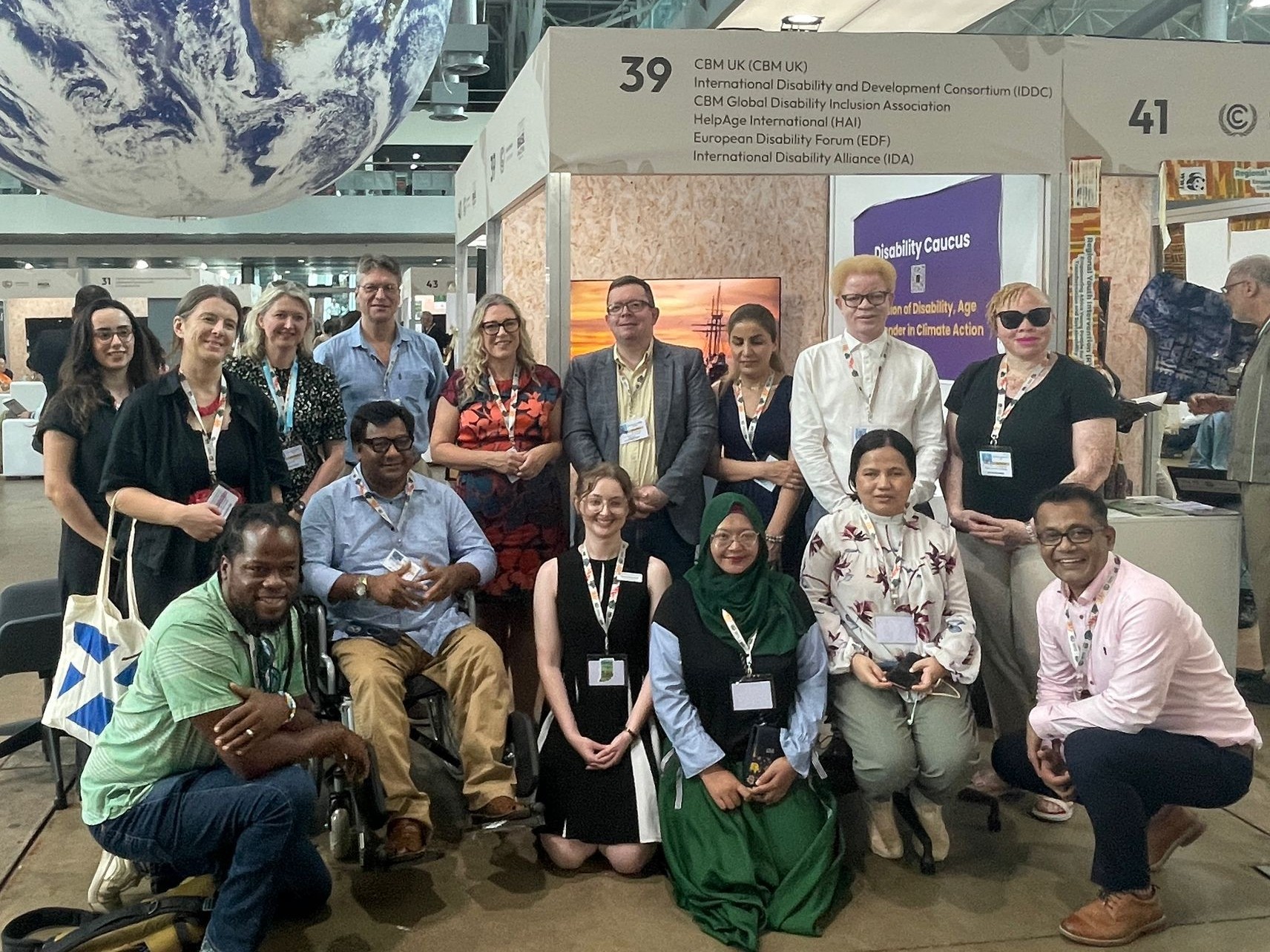
This blog was written for CAN-UK by Mark Barrell, part of the Advocacy team at CBM UK (a CAN-UK member). Mark and other colleagues from CBM UK and CBM Global Disability Inclusion have been participating alongside the disability movement as well as with CAN members within the UNFCCC process since COP26 and also contributed to the Bond Disability and Development Group and International Disability and Development Consortium report: Unequal climate justice for people with disabilities: insights and evidence from communities and civil society organisations